

Scale is a beautiful thing, until quality starts slipping.
If you’ve ever run a large kitting program, you know exactly what we mean. When you’re assembling hundreds of thousands of gift sets for a major retail launch, the margin for error isn’t just tight. It’s nearly nonexistent. One wrong component placement, one missing insert, one bubble in a wafer seal across tens of thousands of units isn’t just a rework issue. It’s a problem with a ripple effect, causing customer returns and loss of trust in your brand.
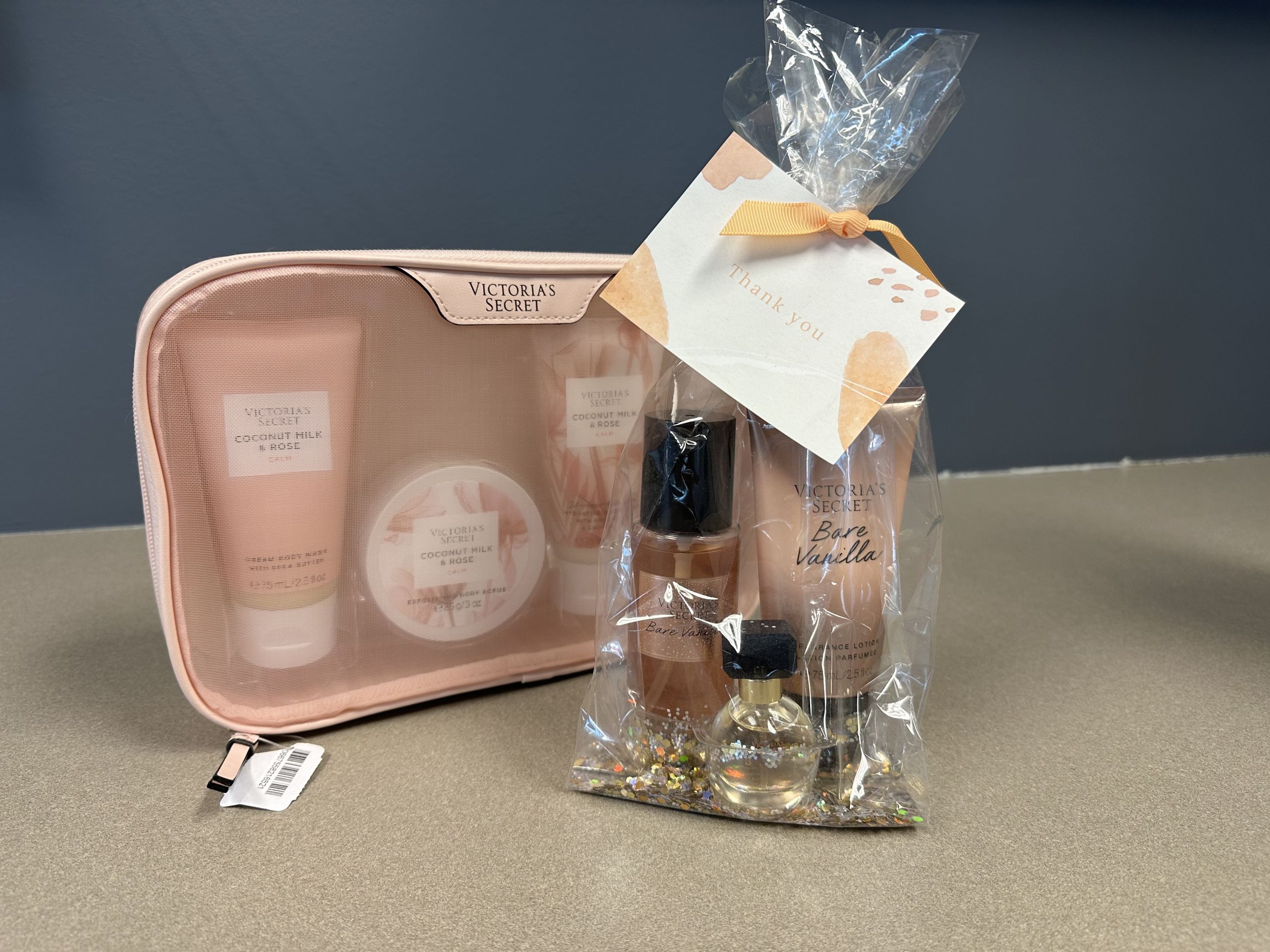
At Accel Inc., we’ve been running large volume gift set assembly programs for clients like Bath & Body Works and Victoria’s Secret for 30 years. Our experience has taught us that quality doesn’t scale automatically. It has to be engineered into every step of the process, long before the first kit is assembled.
Here’s the best way to manage quality control in high-volume kitting.
The Problem With “Good Enough” at Scale
Most packaging operations won’t say this out loud, but a defect rate that looks perfectly acceptable on paper can be catastrophic in practice. Take a 1% defect rate, for instance. On a run of 500,000 units, that equates to 5,000 defective kits, 5,000 disappointed customers, 5,000 potential returns, and 5,000 opportunities for your brand to take a hit, whether that’s on the shelf or in online reviews.
Kitting quality control isn’t a final inspection activity. It’s a continuous discipline that should be woven into every stage of production. By the time a defect reaches a final audit station, you’ve already paid the labor cost to assemble it incorrectly. Prevention will always beat correction.
How Kitting Quality Control Breaks Down at Volume
Before you can solve a quality problem, you have to understand where it originates. In high-volume kitting environments, errors rarely come from carelessness. They come from complexity.
Multi-component kits create exponentially more opportunities for something to go wrong. Each added SKU, each insert, each variant (size, scent, color) is another decision point where a line worker can make the wrong call. And when your line is moving at speed to meet a retailer’s deadline, those decision points stack up fast.
The most common failure points we’ve seen in high-volume kitting solutions programs include:
- Similar-looking components. Two products that share packaging design but differ in scent, size, or formula are easy to confuse, especially when packing thousands of units per shift.
- Component shortages discovered mid-run. When kit inventory isn’t properly isolated from active stock, line teams can run short partway through a production run and improvise in ways that create compliance problems.
- Inconsistent station setup. When assembly stations aren’t staged with components in a clear, repeatable sequence, workers create their own workflow, and those individual workflows don’t always match.
- No approved visual standard. Without a signed-off first-article sample to reference throughout the run, “close enough” gradually becomes the operating standard.
- Missing verification checkpoints. End-of-line audits catch defects, but they don’t prevent them. By the time a problem is found at the final stage, thousands of units may need rework.
The good news is that every one of these failure points is preventable by building the right checkpoints into the process, before and during production, not only at the end.
What a Scalable Kitting Quality System Actually Looks Like
Real-Time Documentation, Not End-of-Run Audits
One of the most impactful changes a kitting operation can make is shifting from periodic audits to continuous documentation. This matters because defects often drift into a line gradually. A shift in component placement, a subtle packaging misalignment, or a sealing issue that starts as one unit and becomes fifty are the kinds of problems that photo documentation catches while they’re still easy to fix. By the time an end-of-run audit finds them, you may be looking at thousands of units of rework.
Dedicated Quality Representatives Per Line
Volume creates pressure, and pressure creates shortcuts. To prevent problems that can result from shortcuts, it’s important to have a quality representative who is solely responsible for ensuring every unit that leaves the line meets spec. Their job is to pull sample checks throughout the run, compare output against the approved first-article sample, and flag anomalies before they become patterns. When production and quality accountability sit with the same person, quality tends to suffer the most.
Component Verification Before Assembly Begins
In large volume gift set assembly programs, a defect that makes it into the kit line is already an expensive problem. Component-level verification, which means confirming counts, checking for damage, validating barcode readability, and inspecting expiration dates where relevant, has to happen before any assembly begins, not as a reactive measure.
First-Article Approval as a Non-Negotiable
Every run should begin with a complete first-article kit, a single fully assembled unit that is reviewed and signed off before volume production commences. That first article becomes the visual standard for the entire run: component placement, orientation, seal quality, insert positioning, presentation.
Without that anchor, “correct” becomes whatever the most recent units look like. With it, any deviation from the standard is immediately visible.
Maintaining Consistent Standards Across Shifts
Quality systems only work if the people operating them are trained to use them consistently.
When a program scales quickly, like if a retailer doubles their order or a holiday program gets extended, most contract packagers will add labor as fast as possible. But untrained or undertrained staff don’t just slow a line down. They introduce variability that quality systems have to work harder to catch.
It’s crucial to have properly trained team members who work to the same documented procedures and visual standards that experienced team members use. This is one of the less-visible differentiators between a packaging partner that handles volume and one that handles volume well.
High-Volume Kitting Solutions That Don’t Compromise on Precision: What to Look for in a Kitting Partner
If you’re evaluating high-volume kitting solutions or considering switching partners, it’s crucial to consider quality systems. Here are the questions worth asking:
- What is their documented defect rate, and how is it measured?
- Do they have dedicated quality representatives, or does quality accountability sit with production supervisors?
- How often are quality checks performed during a run, and how are they documented?
- What happens when a defect is discovered mid-run? What’s the escalation process?
- Can they show you their first article approval process?
- What does their component verification process look like before a line starts?
The answers to these questions will tell you whether a partner has built quality into their operating model or treats it as an afterthought.
Quality Doesn’t Happen at the End of a Run. It Happens Throughout It.
Our founder, Tara, has always said it clearly: a perfectly packaged product is half sold.
That’s not a platitude. It’s the operating philosophy behind every system we’ve built, the photo documentation, the dedicated quality reps, the component verification, the first-article process. For large volume gift set assembly at the scale our clients require, there’s no room for “mostly right.” Everything has to be absolutely perfect, every single time.
That’s the Accel difference. And it’s the standard we hold ourselves to, whether we’re running 10,000 units or 500,000.
If you’re looking for a kitting partner who treats quality as a system and not a final checkpoint, we’d love to talk about what that looks like for your program. Contact Accel today.