

Let’s be real: No one wants to deal with customer complaints. But what happens when your brand reputation is on the line for defects that didn’t even originate in your facility?
This challenge is especially common in today’s complex supply chains. Whether you’re assembling multipacks, creating gift sets, or kitting items from multiple suppliers, you’re vulnerable to quality issues that happen upstream—long before products reach your operation.
The Hidden Risk of Multi-Supplier Operations
When you’re working with products from different suppliers, quality control becomes exponentially more challenging. Each supplier has their own standards, processes, and potential failure points. A single defective component can compromise your entire finished product, damage customer relationships, and hurt your brand reputation.
The problem is compounded when you’re in the co-packing or contract packaging space. Your customers expect perfection, but you’re working with materials and products that have already gone through multiple hands before reaching your facility. This makes having a reliable packaging partner crucial.
A Real-World Quality Control Challenge
That’s exactly what happened with one of our snack clients who needed multipack assembly services. Despite having solid internal processes, they were facing an uphill battle with quality issues that weren’t originating in our facility.
Their customer complaints were increasing, and their retailer scorecard was taking a hit. The culprits were varied but consistent: open wrappers, product inconsistencies, and other defects that were coming from the original manufacturing facility.
Now, we could have taken the easy route and said, “Hey, not our problem—these defects existed before the products reached us.” But that’s not how successful partnerships work, and it certainly wasn’t going to solve our client’s growing reputation problem.
Instead, we asked a better question: How can we stop defective products from reaching consumers before they become a bigger issue for our client’s brand?
Implementing Quality Control in Packaging That Works
As a reliable contract packaging partner for consistent product quality, we developed a comprehensive quality control strategy that goes beyond traditional inspection methods. Rather than waiting until customers complain, we implemented a multi-layered approach to catch defects at the source. Our defect detection in packaging became a competitive advantage for our client.
Here’s how we did it:
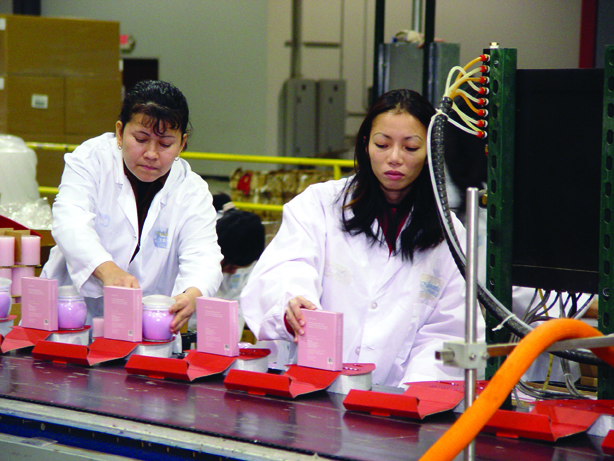
- Enhanced Inspection Training: We completely revamped our team training to include advanced defect detection techniques. Our staff learned to quick-squeeze packages during the packaging process to detect compromised seals and air leaks. Visual inspection protocols were enhanced to catch open wrappers, damaged packaging, and product inconsistencies in real time, rather than after the fact. This training was especially valuable for spotting blister packaging defects and other common issues.
- Systematic Defect Tracking & Reporting: Simply catching defects wasn’t enough—we needed to create actionable intelligence. We implemented a comprehensive tracking system that documented every defect and traced it back to specific production lots and manufacturing dates. This data became invaluable for our client’s supplier relationships, giving them concrete evidence to address root causes with their manufacturing partners.
- Daily Sensory Testing Protocols: We added rigorous freshness, appearance, and consistency checks to our daily operations. Every multipack batch underwent sensory evaluation to ensure it met both our standards and our client’s brand expectations. This wasn’t just about catching obvious defects—it was about maintaining the quality experience that consumers expect.
- Process Integration and Continuous Improvement: Rather than treating quality control as a separate function, we integrated these measures directly into our packaging workflow. This meant every team member became a quality control checkpoint, and defect prevention became part of our operational DNA rather than an afterthought.
The Measurable Impact
The results of this enhanced quality control approach were significant and measurable. Over the course of our partnership, we identified and removed 200,000 defective products before they could reach consumers.
But the real success went beyond just catching defects. Customer complaints dropped significantly, and our client’s retailer scorecard performance improved markedly. More importantly, we helped establish a feedback loop with their suppliers that led to systemic improvements in the upstream manufacturing process.
It wasn’t just about catching mistakes—it was about improving the entire supply chain so any defect in packaging didn’t keep happening in the first place. That’s what makes a reliable contract packaging partner for consistent product quality.
The Value of Defect Detection in Packaging
This experience highlighted something crucial about modern manufacturing and packaging operations: quality control can’t be limited to your own four walls. In today’s interconnected supply chains, your quality reputation depends on every link in the chain.
- Brand Protection: Your brand reputation is only as strong as your weakest supplier. Proactive quality control helps protect your brand equity by catching issues before they reach consumers.
- Cost Prevention: The cost of catching defects during packaging is minimal compared to the cost of recalls, customer service issues, and damaged retailer relationships.
- Supply Chain Intelligence: Systematic defect tracking provides valuable data that can improve supplier relationships and drive upstream quality improvements.
- Competitive Advantage: Companies that can consistently deliver defect-free products gain a significant advantage in competitive markets where quality expectations continue to rise.
Beyond Traditional Quality Control: A Systems Approach
Traditional quality control focuses on catching defects after they occur. But in complex supply chains, this reactive approach isn’t sufficient. You need a proactive system that:
- Identifies patterns before they become widespread problems
- Creates accountability throughout the supply chain
- Builds intelligence that drives continuous improvement
- Protects brand reputation before damage occurs
Preventing Packaging Defects for Your Business
Quality issues in multi-supplier operations are inevitable. But they don’t have to damage your brand or customer relationships. With the right proactive approach, you can turn quality control from a cost center into a competitive advantage.
The companies that thrive in today’s complex supply chains are those that take ownership of quality throughout the entire process—not just within their own operations.